"From the ashes of destruction, a hero rises!"
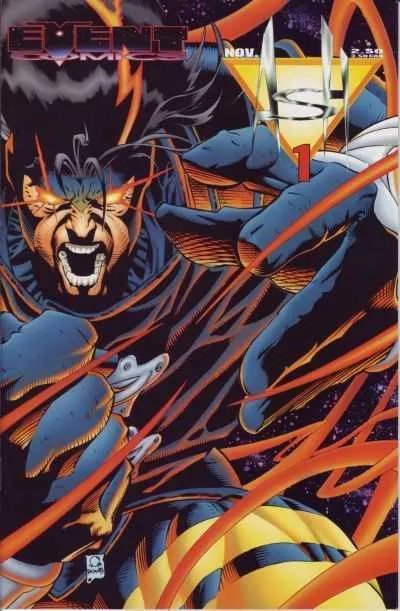
Ashley Quinn was a New York City firefighter who gained incredible powers after being trapped in a burning building. When a regeneration chamber from a dystopian future materialized during the fire, Ashley was transformed - infused with alien genetics and flame-based abilities. Now as ASH, he battles supernatural threats while bearing the weight of preventing a dark future where humanity faces extinction.
Founded by industry legends Joe Quesada and Jimmy Palmiotti in 1994, Event Comics brought us groundbreaking creator-owned titles including ASH, Painkiller Jane, 22 Brides, and more. Though the company operated for only five years (1994-1999), its success led to the creation of Marvel Knights, which revitalized Marvel Comics. This archive celebrates their incredible legacy.
This fan-made archive is a passion project dedicated to preserving the ASH saga and Event Comics' incredible legacy. What started as Joe Quesada and Jimmy Palmiotti's creator-owned dream in 1994 became a phenomenon that revolutionized the industry. I've tried to compile every series, variant, crossover, and character profile to honor their vision and ensure these stories aren't forgotten. This is my love letter to ASH, to Event Comics, and to the real firefighters who embody true heroism. Explore and enjoy!
"Click the tabs above to explore ASH, 22 Brides, Painkiller Jane, and the complete Event Comics universe!"
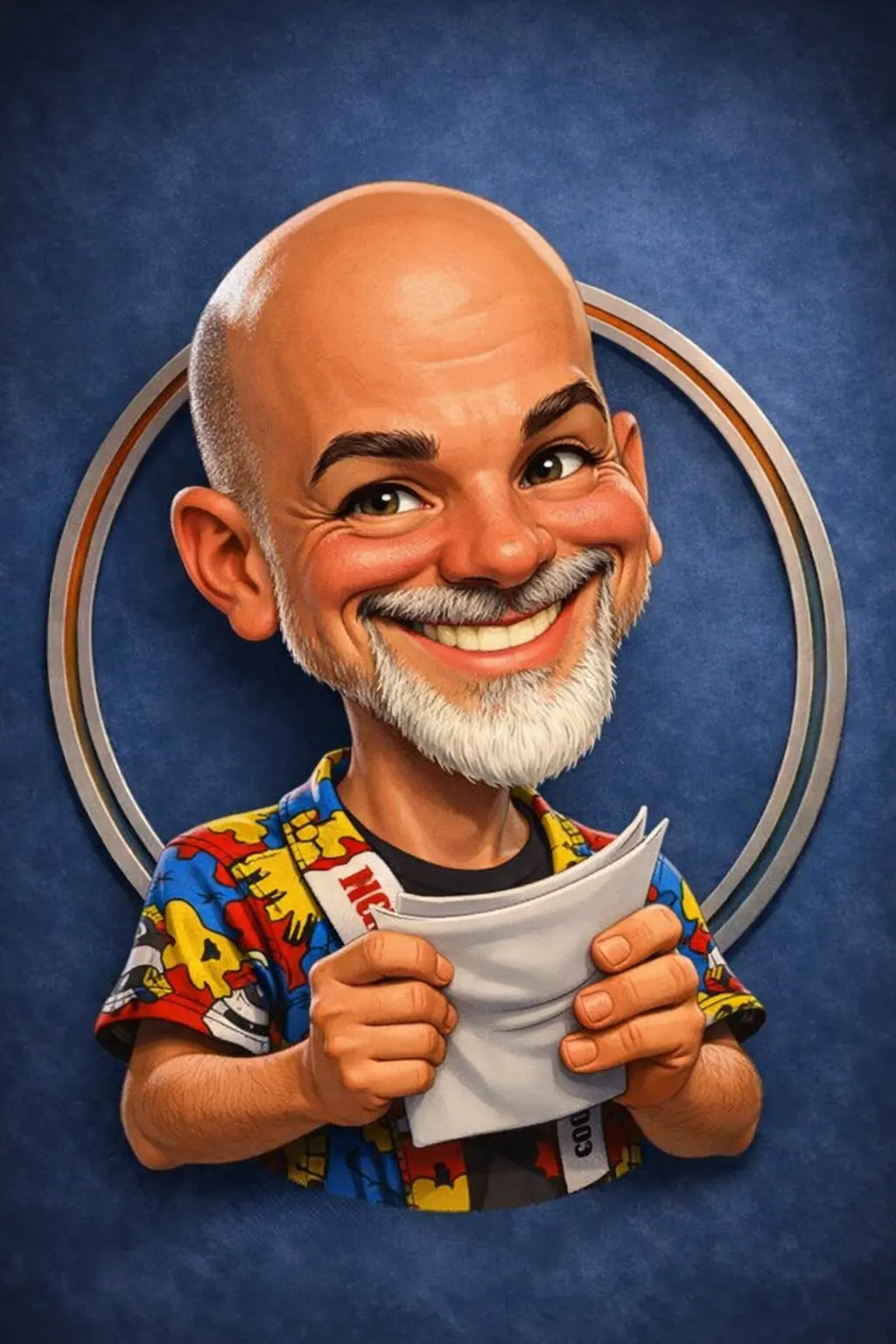
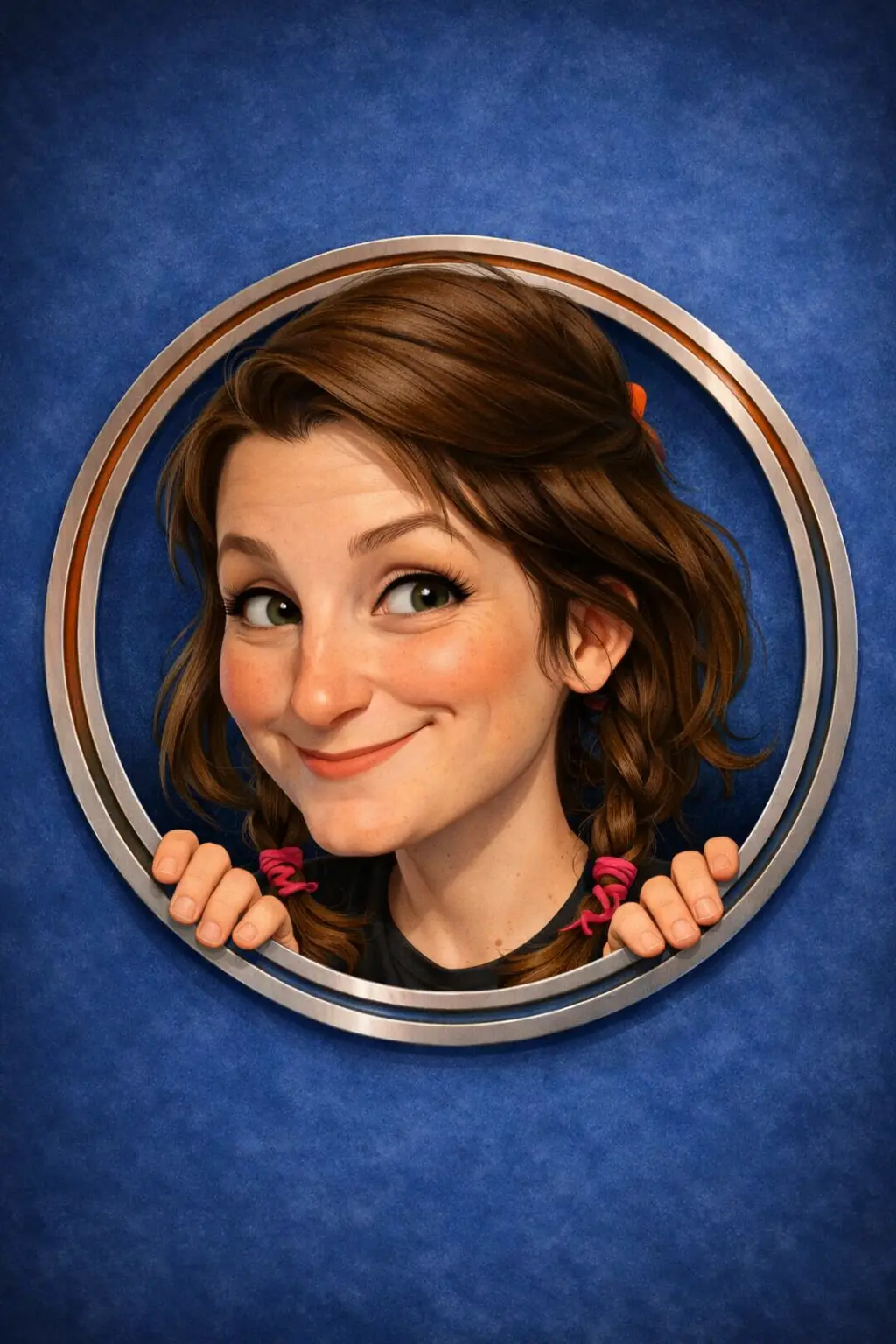
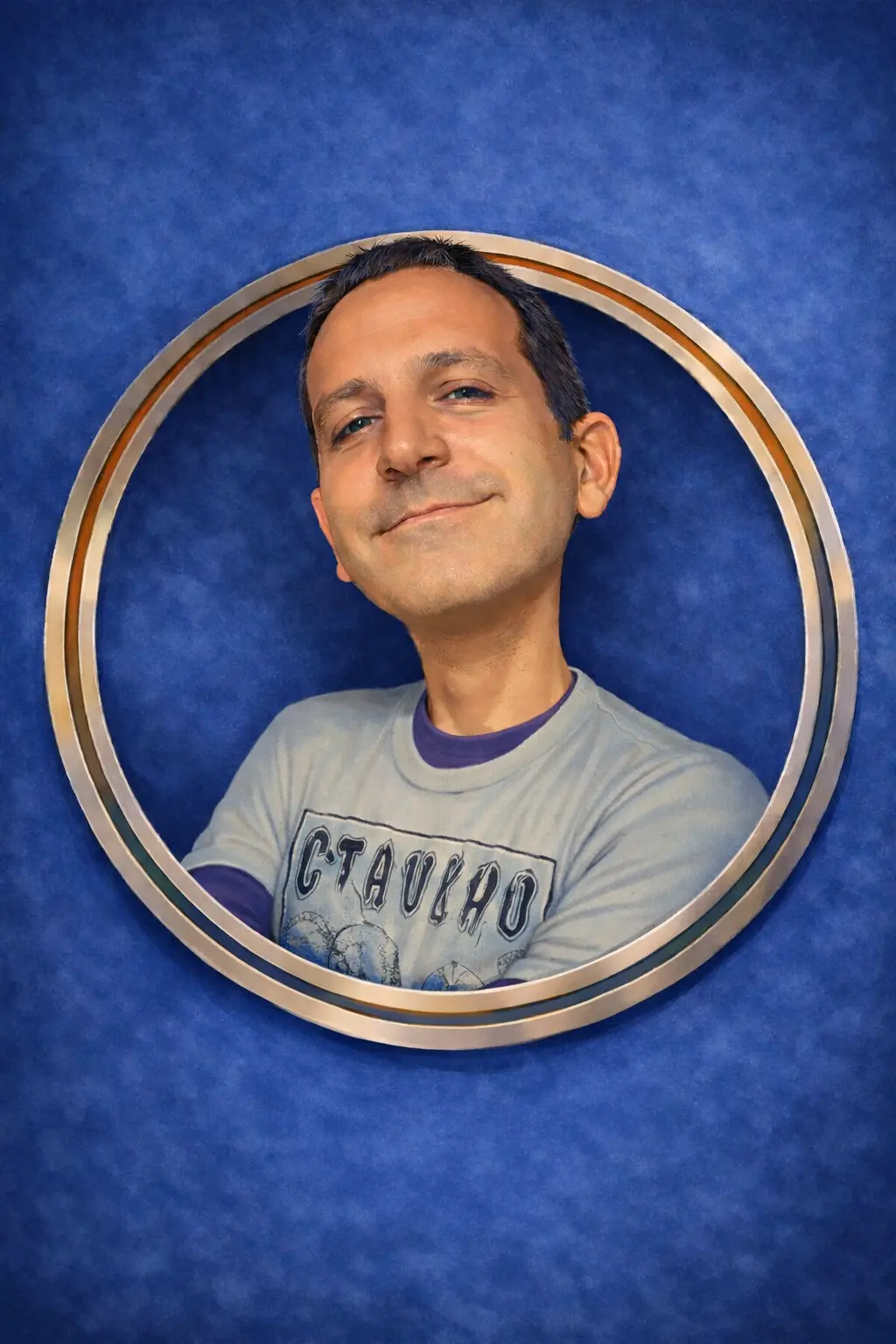
"Meet the visionary creators who brought Event Comics to life!"
Co-Founder, Writer & Artist
Joe Quesada is a visionary comic creator and publisher best known for co-founding Event Comics, where he helped redefine creator-owned storytelling in the 1990s. As co-creator of Ash and a driving force behind cult titles like Painkiller Jane, Quesada blended raw energy, cinematic art, and bold narrative risks that left a lasting mark on independent comics. That same creative fire would later reshape Marvel Comics, but it was at Event Comics where Joe Q first proved how powerful creator-driven stories could be.
Co-Founder, Writer & Inker
Jimmy Palmiotti is a master storyteller whose career spans four decades of comics, television, and film. As co-founder of Event Comics with Joe Quesada, Palmiotti co-created Ash and the unforgettable Painkiller Jane—proving that creator-owned comics could compete with the industry's biggest names. His work at Event Comics laid the groundwork for a career defined by bold characters, genre-blending narratives, and an unshakeable commitment to creative freedom—a legacy he continues through PaperFilms with his wife and collaborator Amanda Conner.
"Talented artists who contributed to the Event Comics universe!"
Artist - Cinder & Smoke
Mexican comic artist known for his dynamic, manga-influenced style. Brought fresh energy to ASH: Cinder & Smoke (1997) with his distinctive character designs and action sequences. Later co-founded Cliffhanger imprint and became a fan-favorite Spider-Man artist.
Creator - Crimson Plague
Legendary industry veteran who created Crimson Plague (1997) as his first creator-owned series at Event Comics. Known for intricate detail and epic storytelling on Teen Titans, Crisis on Infinite Earths, Wonder Woman, and The Avengers.
Artist - Multiple Titles
Acclaimed artist who contributed to Painkiller Jane, Here Come The Big People, and 22 Brides at Event Comics. Married to Jimmy Palmiotti, together they revolutionized Harley Quinn and created numerous fan-favorite series through PaperFilms.
Artist/Writer - Thrax
Created and illustrated Thrax (1996) for Event Comics, bringing his distinctive sci-fi aesthetic to the Event Comics universe. Known for detailed mechanical designs and action-packed storytelling.
Letterer - Event Comics
Professional letterer who brought clarity and style to Event Comics titles. His lettering work helped define the visual voice of ASH and other Event properties, ensuring readers could follow every explosive moment.
Artist - Kid Death & Fluffy
Contributed artwork to Kid Death & Fluffy titles, bringing humor and energy to Event Comics' lighter side. His work helped expand the Event Comics universe beyond ASH's darker themes.
Additional creator profiles and behind-the-scenes content coming soon!
Founded 1994 — The Publisher That Changed Everything
Event Comics — 1994–1999
Event Comics was a creator-led independent publisher founded in 1994 by Joe Quesada and Jimmy Palmiotti — two friends and collaborators who built a reputation for high-energy, high-craft comics during the turbulent mid-1990s market.
Its lean, hands-on operating model — a tiny core team hiring top freelance talent, editing tightly, and promoting aggressively through conventions and press — became the template Marvel later sought when it contracted the Event team to help launch Marvel Knights in 1998.
Event operated like a compact production studio rather than a traditional publisher: founders packaged projects, recruited freelancers, and maintained a visible editorial voice inside the comics themselves. Inside the Event books, this "studio" posture showed up in repeatable patterns: house editorial pages ("Cup of Joe," "Jimmy's Box," and Bradach's "The Third Degree") and recurring specialist vendors for lettering and design.
Though the company operated for only five years, its impact on the industry was seismic. Event Comics proved that creator-owned stories could compete with the biggest publishers in the world — and win.
Event Comics' identity is inseparable from Quesada and Palmiotti's "wear-every-hat" approach. In early flagship issues they routinely appear as primary creators — writing, penciling, inking — while simultaneously running the publisher-facing side: editorial pages, convention presence, and relationship-driven publicity. The effect was a recognizable "Event" finish: tight storytelling, polished presentation, and a clear sense that creators and staff were speaking directly to a growing fanbase, including early emphasis on maintaining a website — a forward-thinking move for 1994.
The company's early editorial backbone included Laurie Bradach, credited as editor on early issues and later explicitly thanked by Quesada as Event's "original managing editor," instrumental in helping launch the company. Based in Chicago, Bradach was credited as editor on Ash #1, Ash: Cinder & Smoke, and held a publisher credit on Crimson Plague. She also authored the recurring editorial column "The Third Degree" within the books themselves. After the Marvel Knights deal materialized, Bradach opted not to relocate, marking the end of her Event tenure.
Quesada describes the shop at one pivotal moment as "three of us" — himself, Palmiotti, and managing editor Nanci Dakesian. This statement captures how small the operational core remained even as the brand's visibility grew. Dakesian came from a long tenure at Archie Comics and initially joined Event part-time, helping especially at conventions. When Bradach chose not to follow the team to Marvel Knights, Dakesian stepped into a more central operational role, becoming a key figure in the transition.
PR, marketing, and distribution partners were handled through direct relationships rather than formal departments — Quesada explicitly framed Event's publicity approach as relationship-led: "shake some hands… hopefully get some free press." This scrappy, personal style became one of Event's defining characteristics and a model for how small publishers could punch above their weight.
The cornerstone of the Event Comics universe. ASH #1 was launched with Joe Quesada on script and pencils, Jimmy Palmiotti on script and inks, colors by Reuben Rude with Digital Chameleon, and letters by Chris Eliopoulos — all edited by Laurie Bradach. The issue famously included a pull-out poster illustrated by industry legend Barry Windsor-Smith, signaling from day one that Event Comics was playing in the big leagues. The series introduced Ashley Quinn, a New York City firefighter transformed by alien genetics and granted flame-based powers, and ran through 1999 across multiple mini-series and crossovers.
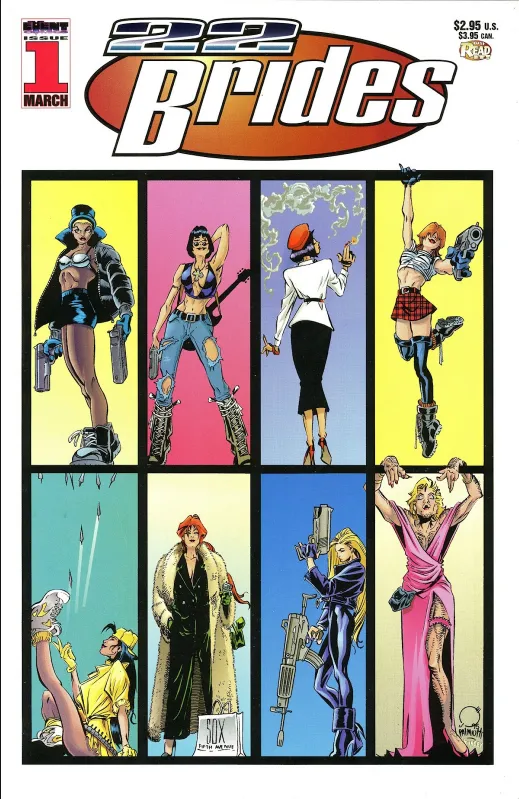
A women-led crime and adventure ensemble framed around a supernatural mob world. The opening arc was literally titled "Married to the Mob" — scripted by Fabian Nicieza, penciled by Scott Lee, edited by Kim Johnson, colored by Olyoptics, and lettered by Chris Eliopoulos. Joe Quesada contributed a 3-page prologue, and the issue's character roster included mob-linked figures alongside the Brides ensemble. Crucially, the issue also featured an early appearance by Painkiller Jane, deliberately linking the two properties and establishing a shared Event Comics universe.
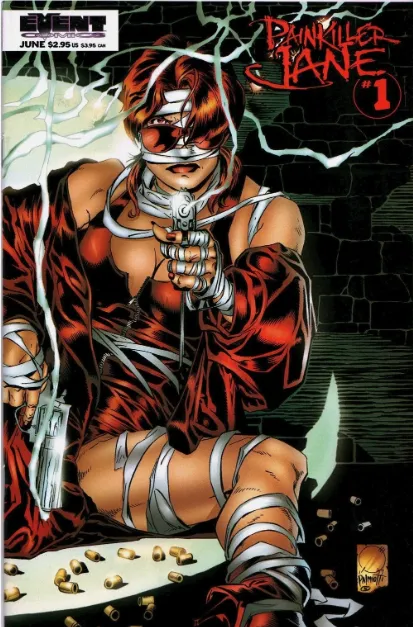
Event's most enduring breakout character — a female undercover cop with regenerative healing abilities, originally co-created by Palmiotti and Quesada. The five-issue mini-series launched in June 1997 with scripts by Mark Waid and Brian Augustyn, pencils by Rick Leonardi, inks by Jimmy Palmiotti, colors by Wil Quintana and Atomic Paintbrush, and lettering by Richard Starkings and Kolja Fuchs of Comicraft. The character would go on to headline her own television series on Sci-Fi Channel in 2007, starring Kristanna Loken, running for 22 episodes.
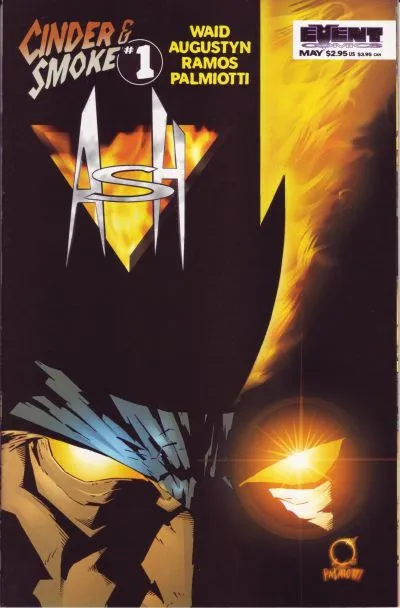
Perhaps the finest example of Event Comics' ambition: big-league talent in an indie wrapper. Scripts by Mark Waid and Brian Augustyn, breathtaking pencils by Humberto Ramos, inks by Jimmy Palmiotti, colors and color separations by Atomic Paintbrush, lettering and design by Richard Starkings, Kolja Fuchs, and John Marasigan of Comicraft, edited by Laurie Bradach. This series demonstrated that Event could attract and deliver the industry's top artistic talent while maintaining full creative control.
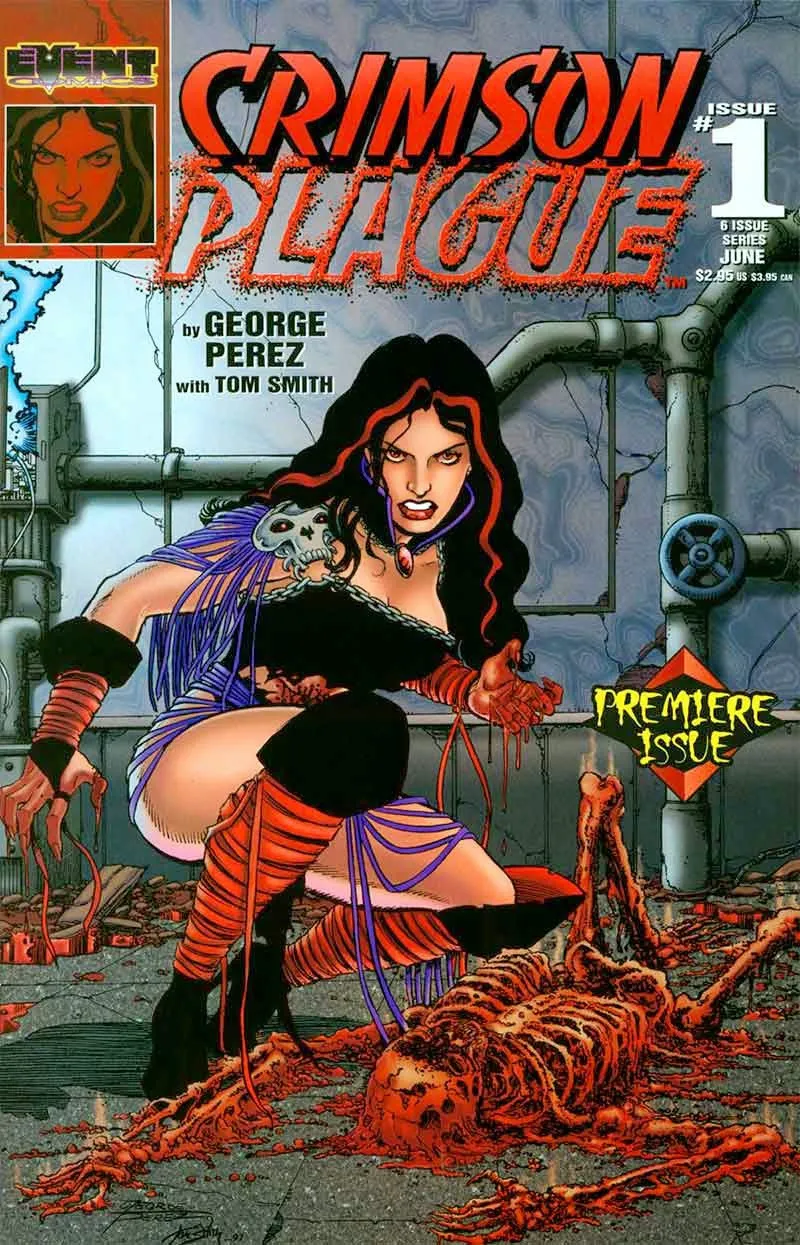
A landmark one-shot representing a remarkable achievement for Event: it was the first creator-owned series by the legendary George Pérez, who handled script, pencils, inks, and editing entirely on his own. The production credits are unusually explicit and comprehensive: colors and production management by Tom Smith, lettering by Richard Starkings and Comicraft, layout design by John Marasigan, film output by Murphy Anderson Visual Concepts, and editorial assistance by Carol Flynn. That Event Comics could attract an artist of Pérez's stature — known for Teen Titans, Crisis on Infinite Earths, and Wonder Woman — and give him full creator-owned control speaks volumes about the company's reputation.
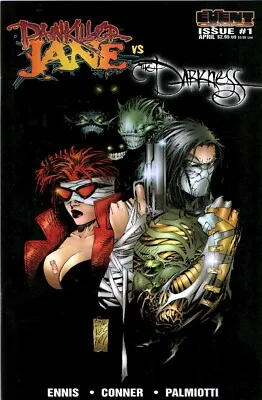
A landmark crossover one-shot uniting Event's biggest star with Top Cow's universe. Script by Garth Ennis, pencils by Amanda Conner, colors by Atomic Paintbrush, and lettering by Richard Starkings and Kolja Fuchs. The combination of Ennis's sharp writing, Conner's dynamic art, and two high-profile characters made this one of Event's most memorable publications and a showcase for exactly the kind of bold crossover storytelling the independent comics scene needed.
Event Comics attracted some of the industry's finest talent across its five-year run. The company operated like a compact production studio — founders packaged projects, recruited elite freelancers, and maintained a distinctive editorial voice inside every book. The following credits are drawn directly from issue-level records for Ash #1, 22 Brides #1, Painkiller Jane #1, Ash: Cinder & Smoke #1, Painkiller Jane vs. The Darkness: Stripper #1, Here Come the Big People #1, Crimson Plague #1, and Thrax #1.
Joe Quesada
Script & pencils — Ash #1; 3-page prologue — 22 Brides #1
Jimmy Palmiotti
Script & inks — Ash #1, 22 Brides #1, Painkiller Jane #1, Cinder & Smoke #1, Here Come the Big People #1, PJ vs. The Darkness #1
Laurie Bradach
Editor — Ash #1, Cinder & Smoke #1; Publisher credit — Crimson Plague #1; Editorial column "The Third Degree"
Nanci Dakesian
Managing editor — Operations, conventions, Marvel Knights transition. Joined part-time from Archie Comics.
Mark Waid & Brian Augustyn
Script — Painkiller Jane #1 (all 5 issues); Ash: Cinder & Smoke #1
Fabian Nicieza
Script — 22 Brides #1 (main story: "Married to the Mob")
Humberto Ramos
Pencils — Ash: Cinder & Smoke #1
Rick Leonardi
Pencils — Painkiller Jane #1
Scott Lee
Pencils — 22 Brides #1 (main story)
Garth Ennis
Script — Painkiller Jane vs. The Darkness: Stripper #1
Amanda Conner
Pencils — PJ vs. The Darkness: Stripper #1; pencils & editorial text — Here Come the Big People #1
George Pérez
Script, pencils, inks & editor — Crimson Plague #1. His first creator-owned series.
Barry Windsor-Smith
Pull-out poster (pencils & inks) — Ash #1
Trace Beaulieu
Script — Here Come the Big People #1
David Ross
Script & pencils — Thrax #1
Tom Wegrzyn
Inks — Thrax #1
Kim Johnson
Editor — 22 Brides #1
Reuben Rude
Colors — Ash #1
Wil Quintana
Colors — Painkiller Jane #1
Atomic Paintbrush
Colors/separations — Painkiller Jane #1, Cinder & Smoke #1, Here Come the Big People #1, PJ vs. The Darkness #1
Olyoptics
Colors — 22 Brides #1
Tom Smith
Colors & production manager — Crimson Plague #1
Chris Eliopoulos
Letters — Ash #1, 22 Brides #1
Richard Starkings & Kolja Fuchs (Comicraft)
Letters & design — Painkiller Jane #1, Cinder & Smoke #1, Here Come the Big People #1, PJ vs. The Darkness #1, Crimson Plague #1
John Marasigan
Layout design — Crimson Plague #1, Cinder & Smoke #1
Steve Le Blanc & George Gatsis
Letters — Thrax #1
David Chapman, John Lai & Jim Molos
Colors — Thrax #1
Carol Flynn
Production & editorial assistant — Crimson Plague #1
Murphy Anderson Visual Concepts
Film output — Crimson Plague #1
Event Comics' most durable legacy is methodological. Marvel's own retrospective describes how Marvel — facing industry collapse and internal instability — specifically turned to the Event team's approach: small-group accountability, aggressive talent recruitment, strong editorial control, and high production qualities to reboot key titles under Marvel Knights beginning in 1998. Marvel's oral history summarizes the approach succinctly: the small group "hired the creative teams" and "edited the stories," bringing an indie ethos into Marvel's pipeline.
This "Event-to-Knights" pipeline quickly translated into industry recognition. The 1999 Eisner Awards recognized Inhumans as Best New Series — produced directly under the Quesada/Palmiotti packaging-and-editing model — proving that the Event method delivered award-caliber outcomes at scale. Within two years of Marvel Knights launching, Joe Quesada was named Marvel Editor-in-Chief, a position from which he would reshape the entire Marvel universe for a generation.
In retrospect, Event Comics reads less like a conventional publisher and more like a proving-ground studio: a compact staff coordinating a rotating bench of notable freelancers, anchored by founders who could both make the comics and run the operation. Their work didn't just entertain — it permanently changed how the industry thought about creator ownership, editorial accountability, and what independent publishing could achieve. The characters they created — Ash, Painkiller Jane, the 22 Brides — continue to resonate with fans around the world, including those of us who discovered them far from New York City, in a small comic shop in Guatemala City, in 1994.
"From three people shaking hands at conventions... to reshaping the entire industry."
Guatemala City, Guatemala
Back in 1994, a close friend of mine, Leslie Huertas, opened a small comic shop in Guatemala simply called Comic Shop. At the time, my pull list was pretty straightforward — mostly Marvel, and mostly Spider-Man. That was my world.
One day that year, Leslie handed me a comic that had just come in. The title was ASH, published by a company I had never heard of before: Event Comics. I didn't read it right away. But when I finally did, it completely blindsided me.
What was happening? Who was this fire-based character? Why did it feel darker, stranger, and more mysterious than anything I was reading at the time?
I was instantly hooked.
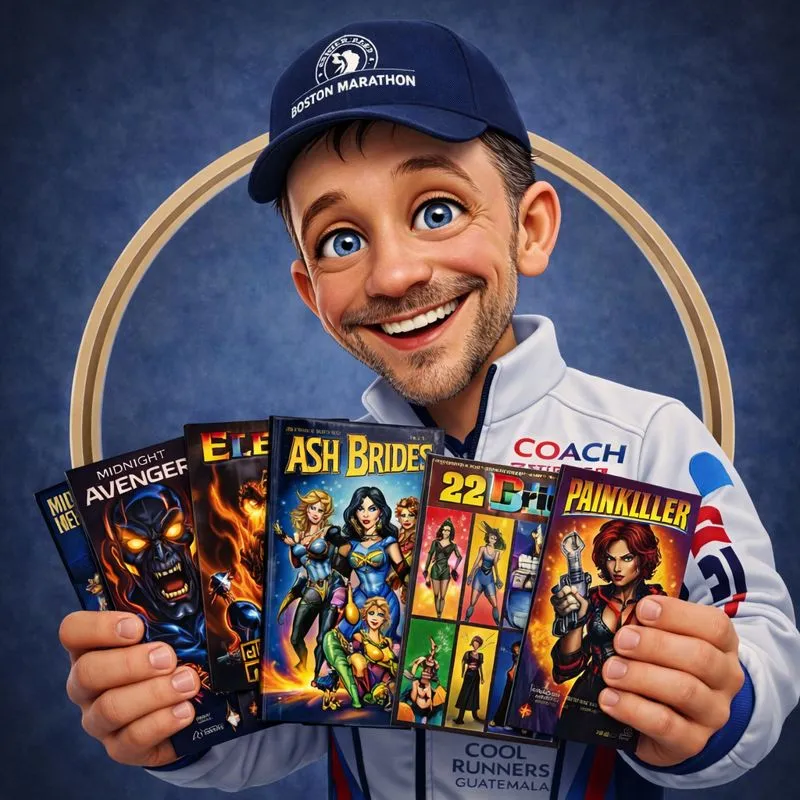
From that moment on, ASH became the book for me. I couldn't wait for the next issue. Every release day, I'd be outside the comic shop before it opened, waiting for the doors to go up so I could get my hands on the new issue as soon as it arrived. Without exaggeration, I became Guatemala's number one ASH — and Event Comics — fan.
Eventually, I discovered that Event Comics had a website. For the first time in my life, I wrote a fan letter to a publisher. I didn't ask for much — just a T-shirt — because there was no way to get Event Comics merchandise in Guatemala.
Months later, something unbelievable happened.
A box arrived in the mail.
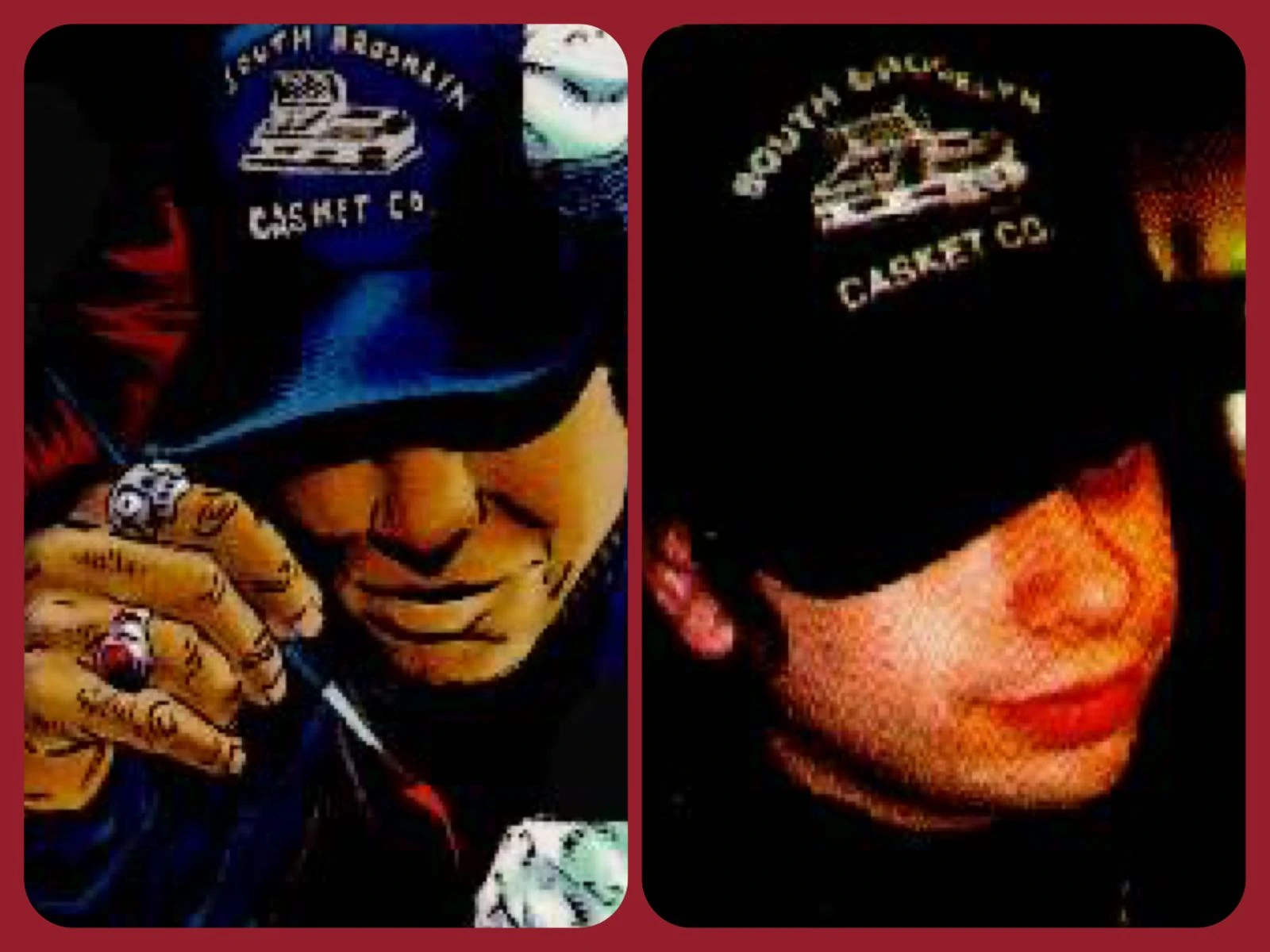
Joe Delfini aka Don Fonti
Inside were around fifteen Event Comics issues — many of them signed, which I believe was the first time I had ever owned signed comics — along with a short, handwritten letter from Joe Delfini (known to readers as Don Fonti from ASH and 22 Brides). It was, without question, the best gift I had ever received as a comic fan.
Inspired by that moment, I created an ASH fan page. It was basic by today's standards, but it was packed with information, passion, and love for the series. At one point, Jimmy Palmiotti even left a comment on the site — something that felt surreal at the time.
Sadly, that page was eventually lost when Google migrated its hosted pages to a new format, and the original site disappeared.
But the fandom never did.
When Event Comics closed its doors, I was crushed — but I never stopped believing the story wasn't over. The last major news I had heard was that ASH was in development at DreamWorks as an animated feature. That alone kept the flame alive.
Years passed.
In 2018, when I saw that New York Comic Con would feature Joe Quesada and Jimmy Palmiotti, I made a decision: I flew from Guatemala to New York with one goal — to meet the creators who had shaped such an important part of my life.
Meeting Joe and Jimmy was surreal. They were generous, genuine, and exactly the kind of creators you hope your heroes turn out to be. It was a full-circle moment — from waiting outside a small comic shop in Guatemala in 1994 to standing face-to-face with the minds behind ASH in 2018.
I also had the privilege of meeting Amanda Conner, who is as kind and gracious as fans say she is.
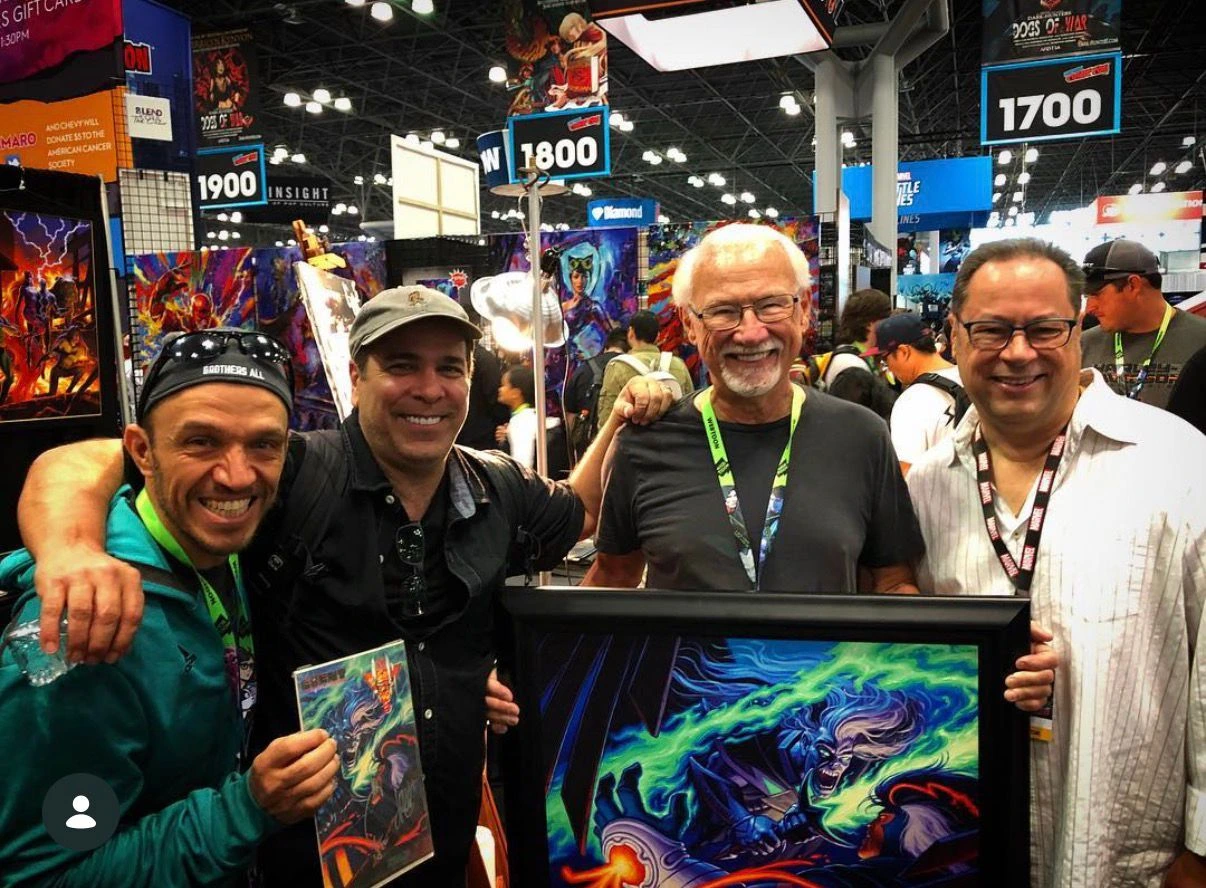
With Joe Quesada, Jimmy Palmiotti, and Greg Hildebrandt beside the original ASH #5 painting
And then came a moment I never could have scripted.
At the booth of Greg Hildebrandt, I saw it — the original painted ASH #5 variant cover. The actual artwork. The fire, the intensity, the image that had lived in my head for decades.
A few minutes later, Joe and Jimmy stopped by on their way to a panel, and I was able to take a photo with the three of them beside that painting. That picture represents more than a fan encounter — it represents 24 years of loyalty, admiration, and belief.
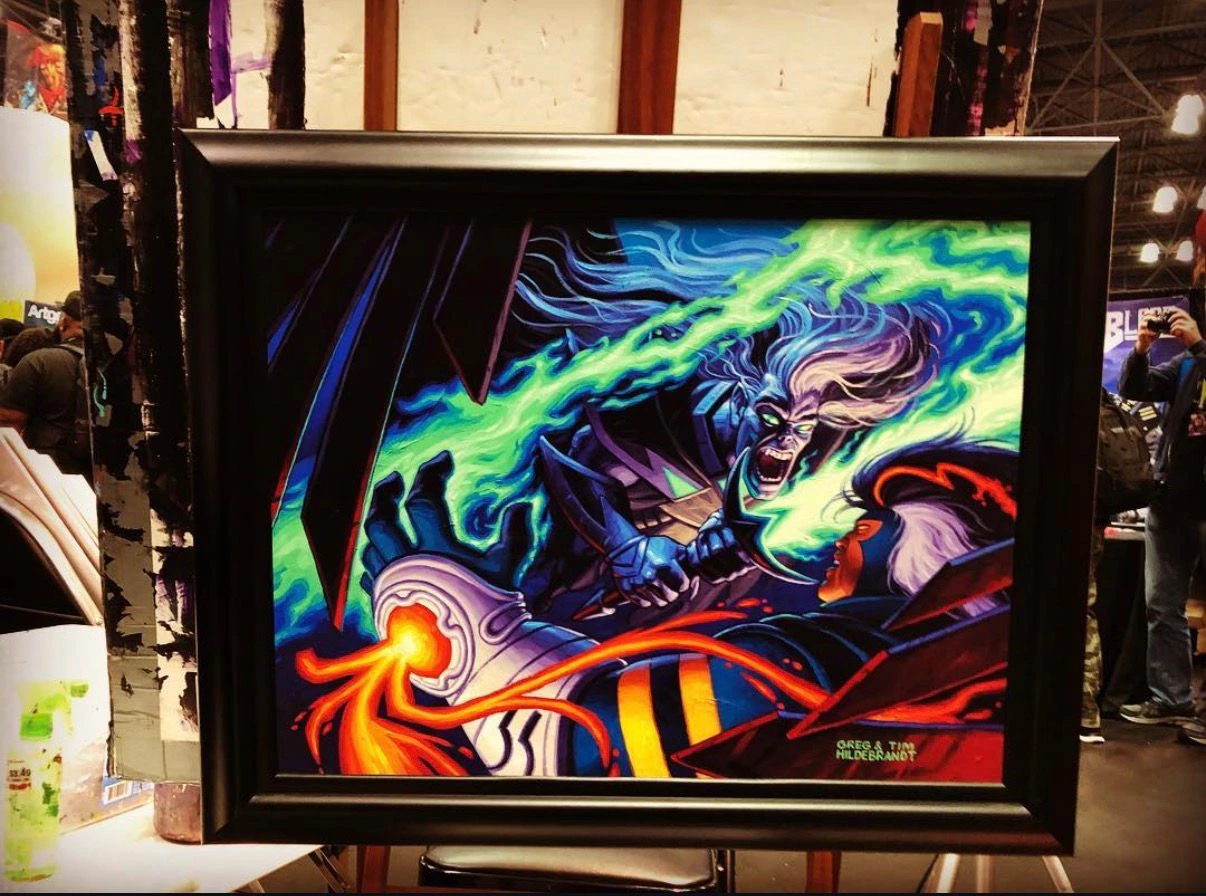
The original ASH #5 variant cover painting by Greg Hildebrandt
I still hope Event Comics makes a comeback. I'd love nothing more than to see new stories of ASH, 22 Brides, Painkiller Jane, and the entire Event Comics family.
Until then, this page exists for one reason:
To keep the flame alive.
Event Comics Collectibles Archive
1990s Indie Boom
Comic-shop exclusive and limited-run figures became a major part of collector culture.
Late 1990s
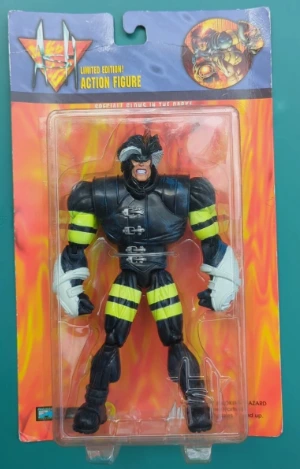
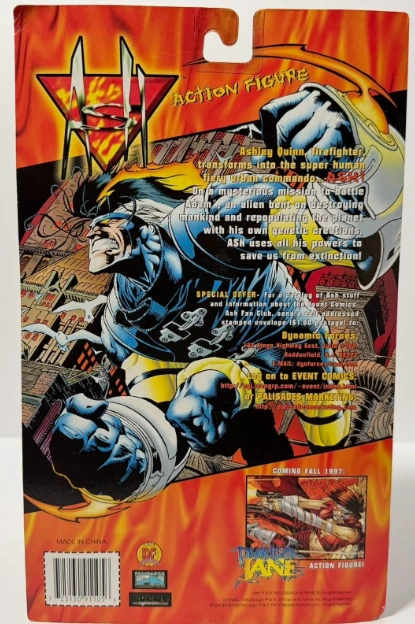
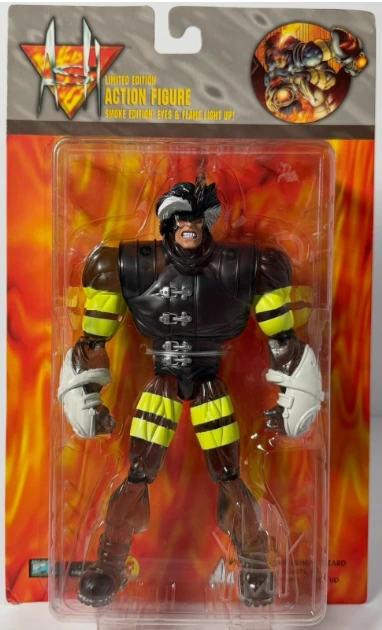
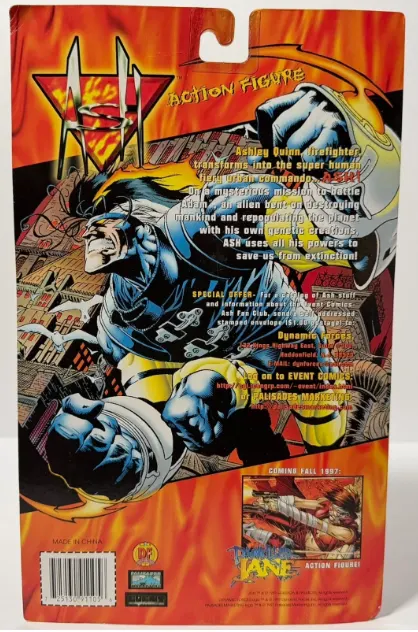
Moore Action Collectibles produces ASH figures with premium sculpts and comic-accurate detail.
1998
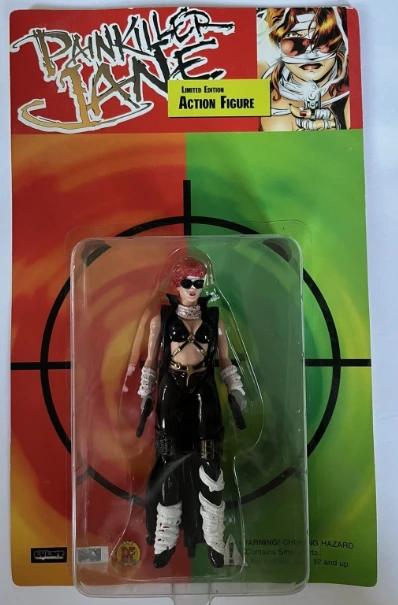
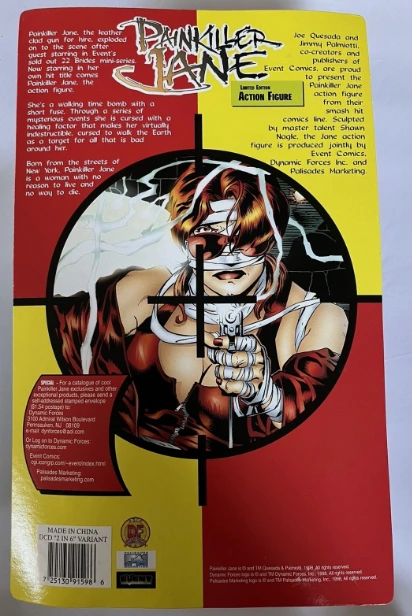
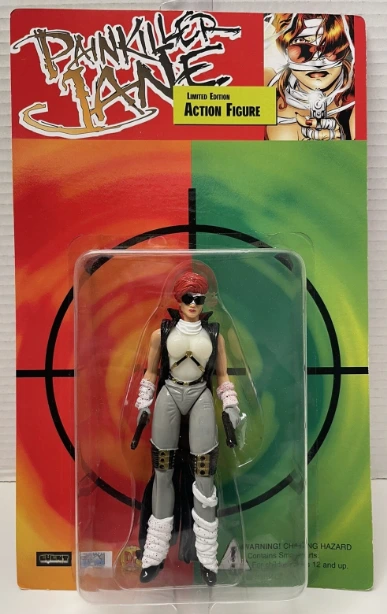
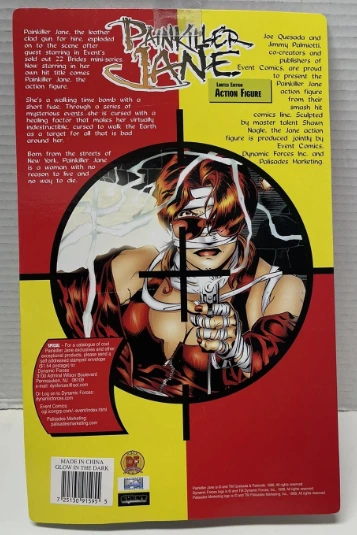
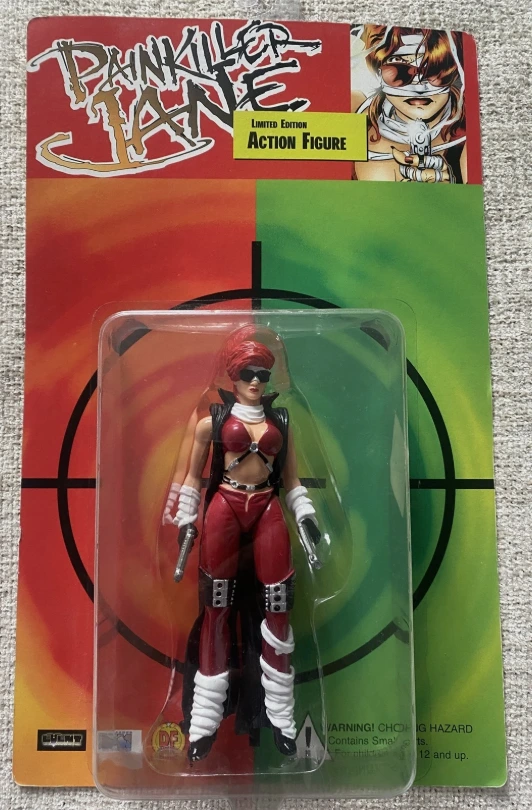
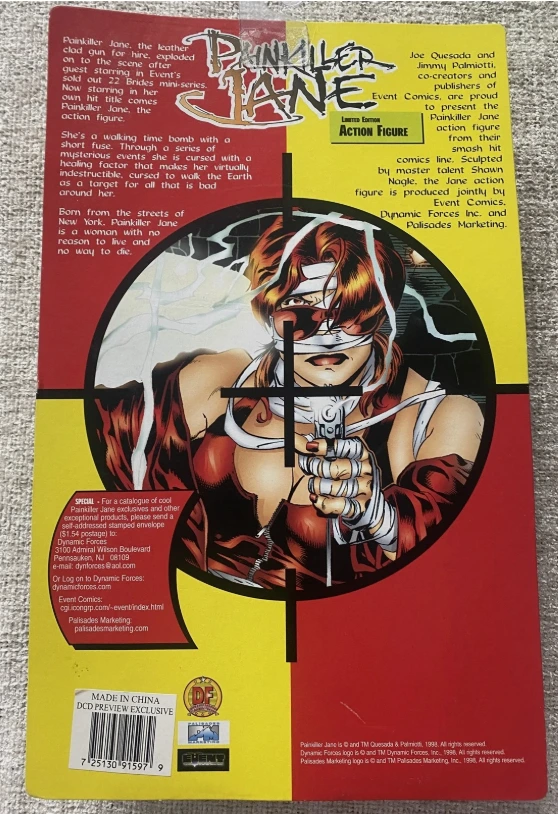
Dynamic Forces releases Painkiller Jane action figures with multiple variant editions for collectors.
Moore Action Collectibles • Late 1990s
Front Package
Back of Card
The standard ASH figure features collector-grade sculpting, multiple points of articulation, and comic-accurate flame effects. Premium packaging showcases Event Comics artwork.
Front Package
Back of Card
Limited variant edition featuring alternate colorway and exclusive packaging. Highly sought-after by collectors.
Dynamic Forces • 1998
Front Package
Back of Card
Classic '90s blister-card presentation with dynamic sculpt capturing Jane's fearless attitude. Accessories included.
Front Package
Back of Card
Special glow-in-the-dark variant featuring unique paint application. One of the standout collectibles from the line.
Front Package
Back of Card
Mysterious "Mr. C" variant with alternate colorway. A collector favorite and one of the rarest Painkiller Jane figures.
These Event Comics action figures represent validation that creator-owned indie comics could stand alongside major publishers on retail shelves. For fans in the '90s, owning an ASH or Painkiller Jane figure meant Event Comics was REAL — not just comics, but a legitimate pop culture force. Today, these figures are time capsules of when independent comics fought their way to the top.